
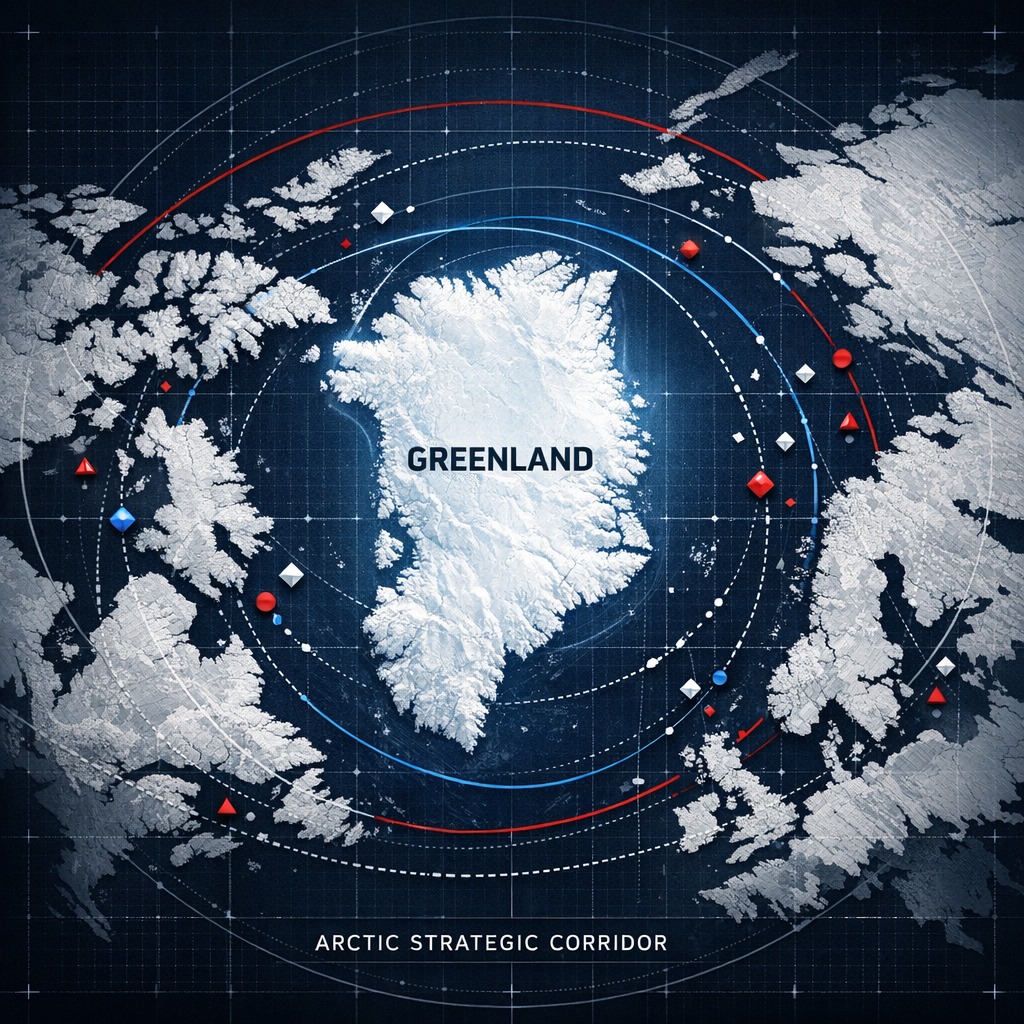
 Let’s talk about Greenland. A country that Americans never talk about. A country that is non-descript in many ways. A country that is not a popular tourist destination compared to many others. So, why has it hit the news and our consciousness over the last two months?
President Donald Trump has made headlines for weeks lobbying to buy Greenland. Most are saying it is such a preposterous idea that it shows Trump has lost his mind.
I read a journal called Foreign Affairs. It is known for its heady, highly educated contributors who analyze American and global foreign policy. I mainly read it to see what I don’t believe, because most of its contributors have what I call Trump Derangement Syndrome (TDS). That is my opinion. To illustrate, Stephen M. Walt wrote recently in the journal, with the title “The Predatory Hegemon: How Trump Wields American Power.”
First, what struck me is the phrase predatory hegemon. I mean, who uses such language, let alone has even heard these words together? Maybe in the halls of academia, but not in real life. Why did he not just call President Trump an aggressive dominator, or an exploitive power monger? At least I would have understood those words.
I suggest Mr. Walt merely wanted to come up with different words with which to describe President Trump, to ostracize him. But that is his current analysis of the Greenland events, as of late. That is their take. Now for mine.
You will remember Denmark and Greenland sent envoys to the White House, then almost immediately they were in routed to Secretary of State Marco Rubio through watching strategic execution. This order signals intent, alignment, and a directive already in motion.
This is textbook Trump doctrine: apply quiet leverage, layer strategic pressure, then claim public resolve when the outcome is inevitable. This is not an aggressive dominator, it is a thoughtful government laying a map of strategy for the future.
Here are a few references to Greenland:
Here is a FB article from Travis Storch (text below).
Why Greenland Matters (And Why Now)
Greenland isn’t real estate. It’s the fulcrum of 21st-century dominance.
Here’s what’s at stake:
– Arctic control: Shipping lanes, missile defense positioning, and forward operating reach
– Energy security: Rare earth minerals, oil reserves, and resource independence
– Geopolitical chokepoint: Blocking Russian and Chinese Arctic expansion before they lock down the North Atlantic corridor.
Whoever controls Greenland controls the high ground for the next century. Russia knows it. China knows it. That’s why they’re already responding with fury.
The Strategic Shift
For decades, America debated while adversaries moved. Trump inverts that model: move first, explain second, own the narrative last.
If this deal closes, the global chessboard redraws overnight:
– NATO security architecture hardens at the northern flank
– Chinese Belt and Road expansion hits a structural wall
– Russian Arctic ambitions shrink under U.S. forward presence
Why This Transcends Party Lines (If We Let It)
Here’s what matters: this isn’t a red-or-blue issue. This is an American strategic advantage that serves core priorities both parties claim to care about.
For those who prioritize national security and military strength:
Greenland gives the U.S. unmatched Arctic positioning, forward defense capability, and a permanent check on Russian and Chinese expansion. It’s hard power. It’s deterrence. It’s exactly what “peace through strength” looks like in practice.
For those who prioritize climate leadership and clean energy:
Rare earth minerals are the backbone of renewable energy infrastructure: solar panels, wind turbines, and electric vehicle batteries. Right now, China controls 80% of global rare earth processing. Greenland changes that equation overnight. Securing those resources means we can build the green economy without being held hostage by adversarial supply chains.
For those who care about economic security and jobs:
Resource independence means American manufacturing, American jobs, and leverage over global supply chains. It means we stop importing what we could be producing. It means economic sovereignty, not dependence.
For those focused on diplomacy and alliances:
This isn’t a conquest. It’s a negotiation with a NATO ally. Done right, it strengthens the alliance, compensates Denmark fairly, respects Greenlandic autonomy, and creates a model for strategic cooperation that doesn’t rely on coercion.
The Real Contradiction Isn’t Left vs. Right
The contradiction is this: we fight each other over the aesthetics of leadership while ignoring whether the underlying strategy actually serves the country.
If a Democratic administration pursued Arctic resource security, NATO hardening, and rare-earth independence through diplomatic acquisition, the policy would be sound. The execution details would matter. The terms would matter. But the strategic logic would hold.
If a Republican administration does the same thing, the same logic applies.
The question isn’t who proposed it. The question is whether it strengthens America’s position for the next 50 years.
Right now, we are so divided over who is leading that we’ve stopped asking where we’re being led and whether it’s the right direction.
What Makes This Actually Good for the American People
Here’s the test: Does this make us safer, more prosperous, and more resilient in a world where adversaries are moving faster than we are?
Yes.
– It secures the Arctic before Russia and China lock it down.
– It removes a critical supply chain vulnerability in rare earth minerals.
– It creates a forward defense perimeter that protects the homeland.
– It generates long-term economic value through resource development and strategic positioning.
This isn’t imperialism. It’s not recklessness. It’s forward-thinking statecraft in a world where hesitation costs more than action.
The Division Is a Choice
We can fight about Trump’s tone. We can argue about whether this feels right based on partisan reflex.
Or we can look at the chessboard, assess the stakes, and ask whether this move strengthens the country regardless of who made it.
The Arctic is being claimed right now. If we don’t move, someone else will. And when they do, we’ll spend the next century managing the consequences of our inaction.
This is one of those rare moments where the strategic interest aligns across ideological lines. The only thing stopping us from seeing it clearly is the noise we’ve created around everything else.
The signal is clear. The stakes are existential. The window is now.
And the choice to make this about parties instead of the country? That’s on us.
Here’s my take. If China, and/or Russia wanted to make aggressive moves against the United States in a first strike approach, invading Greenland would be a huge gambit for them to insuring close land and base maneuvers. President Trump is taking this off the map and ensuring more safety for us.